
Written Blogs
Clarifying what children need from you to make your environment "home."
Blog Topics:
Introducing and Recommending
The Unsettling of America
Is the American dream making us and our kids. . .
TRULY happy?
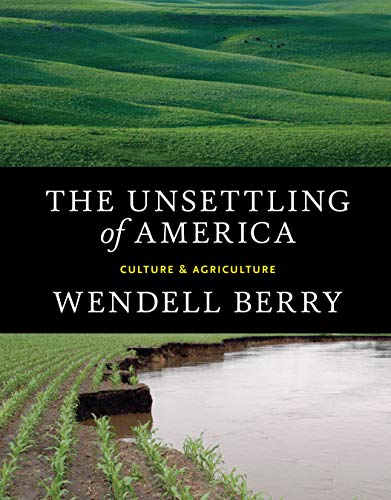
Join us as we reassess our values with Wendall Berry.
Wendell Berry is an essayist, poet, and fiction writer who has consitently brought stinging and intelligent critique to the modern American life.
He is refreshingly nonpartisan and makes himself an equally irritating voice of conscience for those who would consider themselves either left or right in the traditional political spectrum.
Most essentially, for those of us who would serve the next generation as parents and educators, he provides powerful insight into the ways our loss of place, land, and familial consistency has damaged the health of all peoples, children among them.
The Unsettling of America is Berry's most famous book of essays, written in the 1970s, but no less applicable today.
Though to unpack his entire work is beyond the scope of an eight-week email series,
we will utilize his writings to help us discuss two essential themes:
Hard Work
&
The Restraint of Simple Living.
Whether leading a family, a classroom, or youth program, the wisdom in this book is not only relevant for you, but deserving of your attention and energies to address it!
We are seeking to raise healthy, happy children in a world obsessed with the easy life of ever greater consumption.
The goal is not compatible with the norms.
Americans seeking to raise children who can find joy in the labors of their life while producing something of value, not simply consuming them, are going to find ways to resettle their American life. Wendell Berry can help.
Get your copy of "The Unsettling of America"
and join us as we explore some steps we can all take to begin developing harder working, simpler-living, and simply-happier children!
A Trinity Family is not compensated for this review in any way.
Introducing and Recommending
Hold On To Your Kids
What is Peer Orientation?
Join us as we unpack the work of Gordon Neufield and Gabor Mate on Attachment Theory.
"Attachment Theory" seems to be a hot topic right now in many circles.
At its roots, this theory is the simple declaration that children need solid relationship with adults if they are to mature appropriately. When this doesn't happen, children grow older, but fail to develop the skills necessary to be a thriving human being. Think "adulting."
Kids are hardwired to make attachments to a wiser, stronger, more trustworthy adult so they can have someone to follow and depend on as they develop. Alas, much of the popular sentiment around "attachment theory" misses this central crux, replacing it with an odd sense of the fragility of childhood. Doing so, they miss the central declaration that kids need adult authority in their life, adults who can show them the way to what is most needed in life, not necessarily what is most wanted.
Hold on to Your Kids is the best resource I have discovered to help cut through the noise around "attachment theory" and begin to take steps to make sure these essential adult attachments are being provided children. Though titled toward parents, it is written and applicable for all adults of influence.
Hold on to Your Kids unpacks one key concept as identified and coined by Dr. Gordon Neufield:
Peer Orientation.
Peer orientation is the modern phenomenon which has set children up to bond in their attachments to peers over and above their natural attachments to adults. As Drs. Neufield and Mate see it, and I completely agree, this is perhaps the single greatest ill of our modern, American society.
Adults, specifically parents,
need to matter more than peers.
Whether leading a family, a classroom, or youth program, the wisdom in this book is not only relevant for you, but deserving of your attention and energies to address it! Our systems of peer orientation are failing our children and our society.
Expertly diagnosed in this book, peer orientation can be found at the roots of societal ills including bullying, sexual promiscuity, violence, and "adulting." This is a problem we, as adults, have the power and responsibility to ensure our kids do not fall victim to.
Get your copy of "Hold on to Your Kids"
and join us in exploring some steps we can all take to begin addressing the peer orientation problem!
-
Wants vs. Needs
Establishing our role as adult leaders and directing our actions to give children what then need, not necessarily what they want, to build healthy habits in their lives. -
Claiming Authority
Though it can be carried unhelpfully, authority is not an optional adult trait. Powerful adults carry authority responsibly. -
Providing Futility
Child resistance should be futile. Futility is a gift your children need you as the adult to give.
-
Re-thinking Education
Attachment is more important than education. Actually, without it, education doesn't happen. -
Re-prioritizing Grandparents
How you can help begin healing the generational divide and improve attachment. -
Becoming Mentors
Giving yourself to the children around you, not just what you know. -
Creating Community
Helping kids break free from the confines of grade and class and into familial, familiar, multi-generational community.
A Trinity Family is not compensated for this review in any way.
When our expectations are healthy and helpful, we guide children to new levels of growth and competence on their way to adulthood. When our expectations are unhealthy, we cap their growth under our false ceiling of low expectations.
we have a responsibility to intentionally evaluate the solidity of the expectations fueling our interactions.
Modern adults are busier than ever trying to make sure children are happy.
Too often this results in lowering our expectations of them and
Here are some questions we will be exploring in this series:
- What expectations will help develop healthy, happy children?
- What expectations will unnecessarily and unintentionally limit them?
Before diving further into some healthy expectations for our children, see where your expectations are for yourself.
Do you have healthy expectations for yourself? Where can you grow?
The expectations we have for kids must start in our own lives.
In our latest book, Adults For Children, we talk about health in five distinct categories. Using those categories (listed below), ask yourself what healthy habits and expectations you want to be fostering in yourself and in kids, who will one day be adults.
Rooted Spirit
i.e. expect self and children to be able to be still, quiet, and alone at times.
Learning Mind
i.e. expect self and children to help teach younger peers
Connected Heart
i.e. expect self and children to give greetings with warmth and affection
Playful Soul
i.e. expect self and children to pause before a sunset
Vital Body
i.e. expect self and children to play outside every day
Check your list and see where you fail to meet your own ideal expectations. This is the best place to start in growing your expectations!
And then you can hold healthier expectations for your children to prepare them for the healthy adult they are becoming.
Enjoy the journey of growing your expectations!
Several expectations explored more in depth below:
Raising Expectations
to develop life-long healthy habits in children:
-
Solitude Expectations
Do you expect kids to be able to be alone, quiet, and still . . . without technology? Why it's important and implementation ideas. -
Expected to Contribute
Do you expect kids to contribute to the needs around them? Contributing gives children meaning and prepares them for future contributions. Benefits and implementation ideas for expecting kids' contributions. -
Eating Expectations
Do you expect children to eat healthy, diverse, "adult" foods? Why it is important and helpful implementations ideas to get you started.
-
Media Expectations
Whether it is music, TV, current events, or books, there is a plethora of media to be consumed. We must expect children to focus and steward the media they do absorb so it will better serve them in engaging with the people right around them. -
Expectations to Respect Boundaries
Whether you visit an antique shop or waiting to eat their plate full of food, it is healthy to expect children to respect boundaries. They are looking to adults for help and assistance. Here are some helpful ways to give those needed boundaries, both inside and outside the home. -
Expect Self-Control
We need to set children up for success by expecting them to control themselves, and building their ability to handle well increasing freedoms and responsibilities. Here are some helpful ways to increase our expectations and kids' capacity for self-control. -
Sleep Expectations
We are setting children up for stress when we fail to prioritize clear rest times and when exhaustion is a welcome ally in getting kids to sleep at night. Here are some ideas to help set our kids up for healthy sleep and rest habits for the rest of their lives.
Creating culture is a leader's preeminent responsibility
"Culture” has become a hip word in professional circles, but one most people still find to be an intangible enigma.
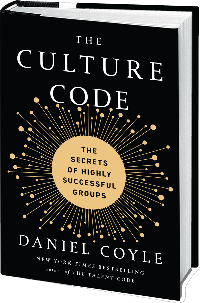
To close out 2020, I had the privilege of reading the clearest book I have yet found deconstructing and reverse-engineering the subject of culture-creation.
Whether leading a family, a classroom, or youth program,
the wisdom in Coyle’s book is not only relevant for you, but essential for your success!
Whether creating culture is your thing or something that seems beyond you, there are down-to-earth, real-life examples in this book, which will help you sink your teeth and get your hands around this illusive concept. Drawing from the wisdom of great leaders ranging from Greg Popovich (former basketball coach of the San Antonio Spurs) to Tony Hsieh (former CEO of Zappos),
Coyle succeeds in making culture-creation practical and tangible, without watering it down.
Daniel Coyle’s book, The Culture Code, reduces culture to three key principles (parentheses mine):
1. make people feel safe (belonging),
2. get vulnerable (connection),
3. map out your story (give meaning).
Get your copy of The Culture Code
and start implementing key components of culture into your environments!
-
Personal, Up-Close Connection
Three ways to easily implement more connection to support your verbal "I love you" statements. -
Performance Feedback
Three actions to maintain high expectations in your environment. -
Big-Picture Perspective
Help kids look beyond themselves with these three actions.
-
Importance of Proximity
Consider arranging these three main spaces in your environment with the goal of proximity to establish a healthier culture and connection. -
Vulnerability Starts with You
Be the one to open up, and often. Start vulnerability in your environment by asking children these three questions. -
You Need a Clear Story
Three steps to start your clear story to pass on the values of your environment to children therein. -
Giving Unified Language through Catchphrases?
Remind everyone what you stand for by repeating words over and over with with these three easy steps!
A Trinity Family is not compensated for this review in any way.